One thing contemporary art can do is make visible the structures of power operating beneath the surface of everyday life. Fahrettin Örenli presents a world of things suffocating in the capital's artificial ecosystem. His practice does not stop at exposing this condition; it goes further, making us feel how we ourselves function within it.
Örenli’s solo exhibition at .artSümer in Istanbul dissects the organism of the city and the mechanism of capital flowing through its veins from an ecological perspective. His trajectory, moving between Amsterdam, Istanbul, and Seoul, sharply captures the resource-plundering and ecological suffocation of the Global South caused by the colonial expansion of capital, which prevails beyond any individual economic crisis such as the collapse of the Turkish lira. Yet these three cities do not occupy the same position within that story. Seoul holds a complex ecological position—simultaneously absorbing and emitting resources—and when Örenli's gaze lands there, what opens up is less a narrative of solidarity than a more uncomfortable question of complicity.
The series Particles, composed of video and paintings, questions how individual and collective knowledge is constructed and dissipated within the city. Following the trajectory of Last Signal, The City Tree; Lost Soul Collector, and The Man Carries the Knowledge of Tree, this work asks whether we are accumulating knowledge solely around the value of money in an era of commodified profit. Örenli proposes a hypothesis:If our knowledge possesses consciousness, and if after the death of the human body in the city, that knowledge cannot depart as a single unit, because that person's knowledge was neither autonomous nor sustainable, then that knowledge decomposes into particles. These particles of knowledge then migrate to the nearest living destination within the city, the space offering optimal conditions for their existence, which tends to become the city tree. Under this hypothesis, individuals who have lost consciousness amid the city's illusions cannot build robust, sustainable knowledge nor generate the consciousness of knowledge. Ultimately, the city trees become collectors, receiving the lost consciousness and the particles of knowledge consciousness after the physical death of city dwellers.
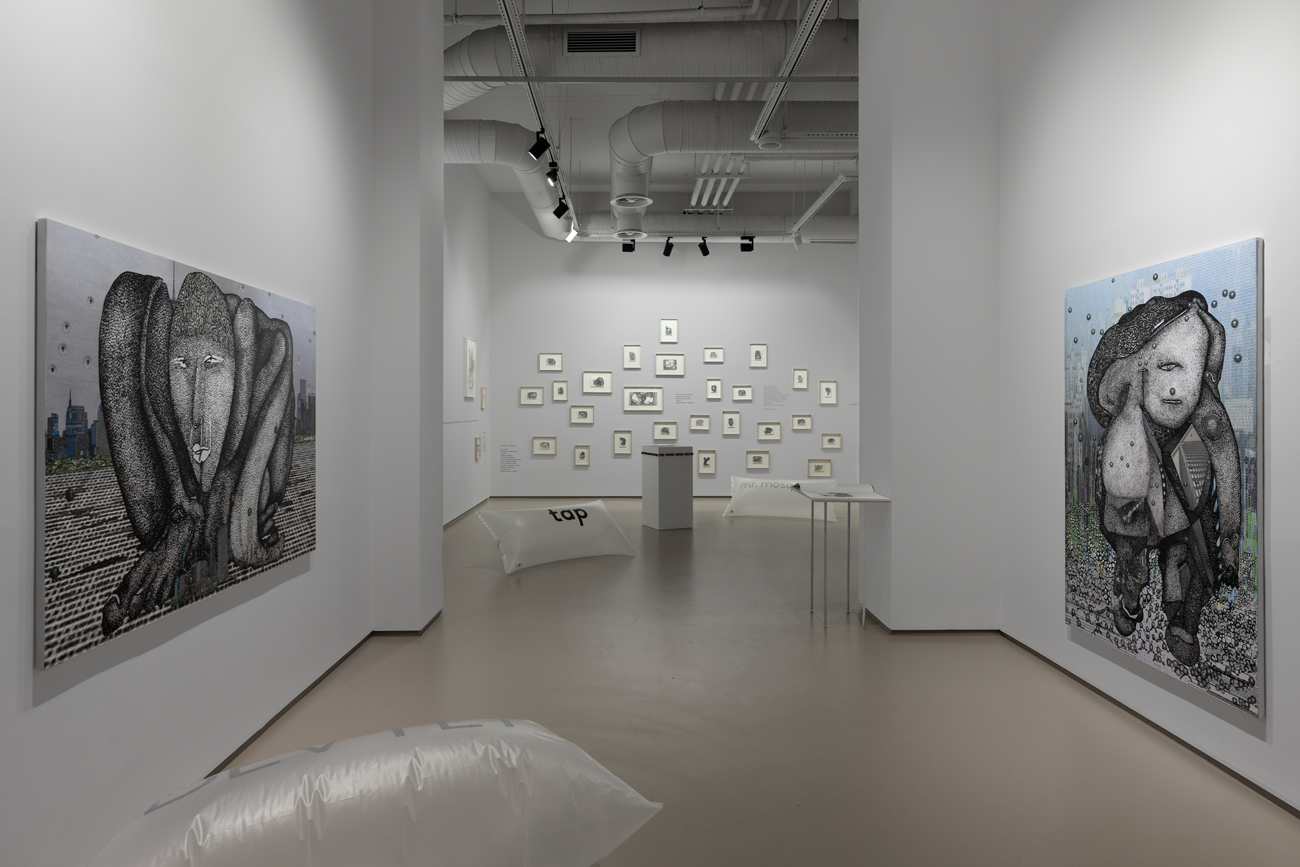
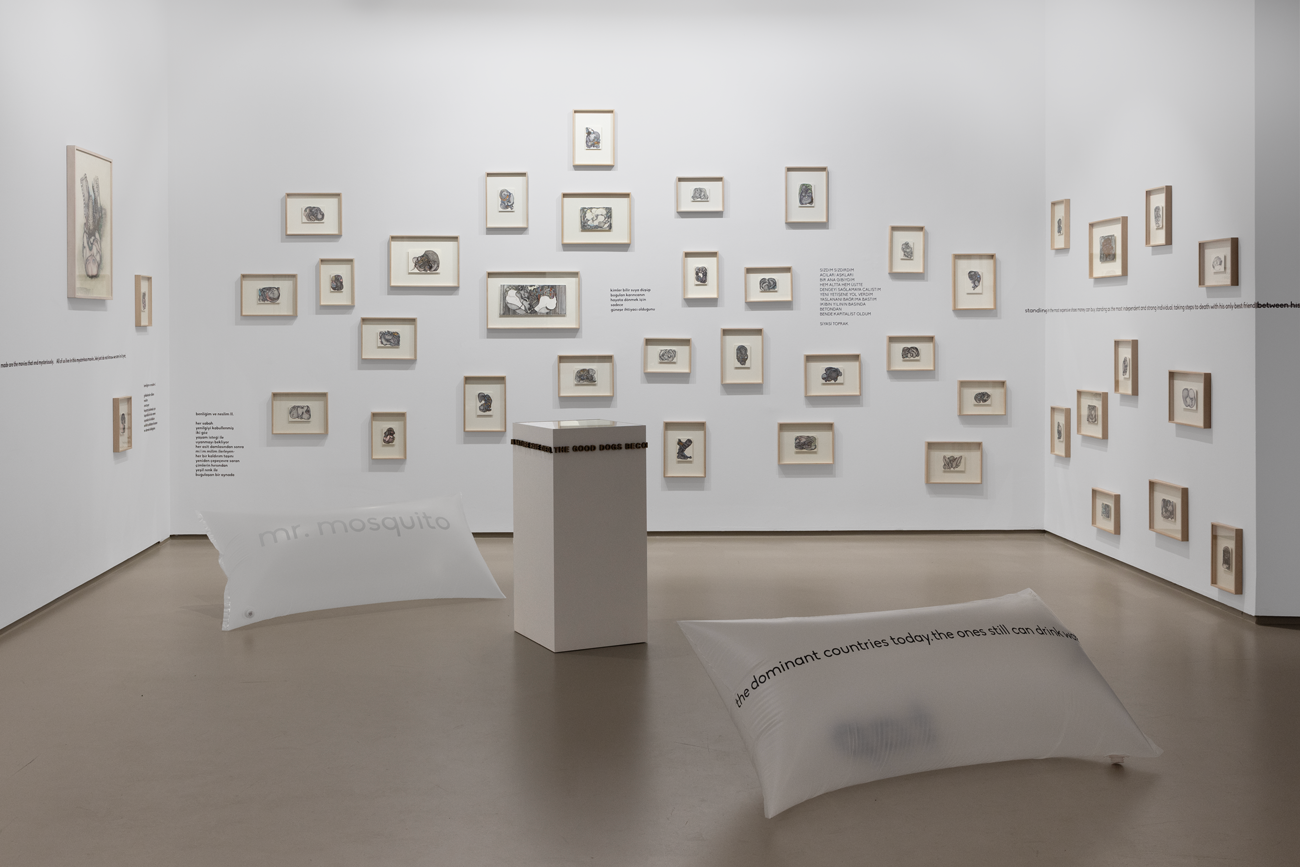
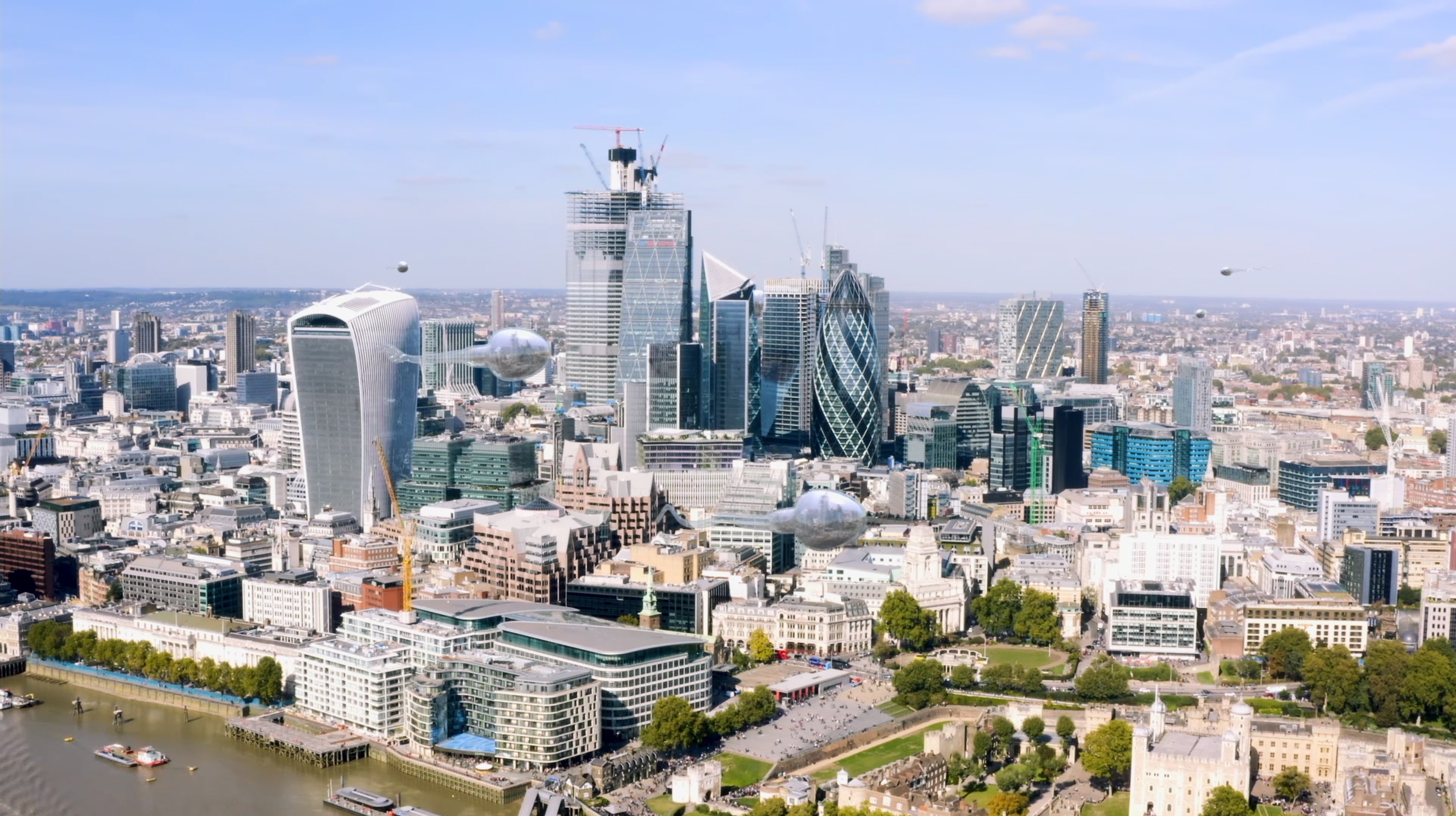
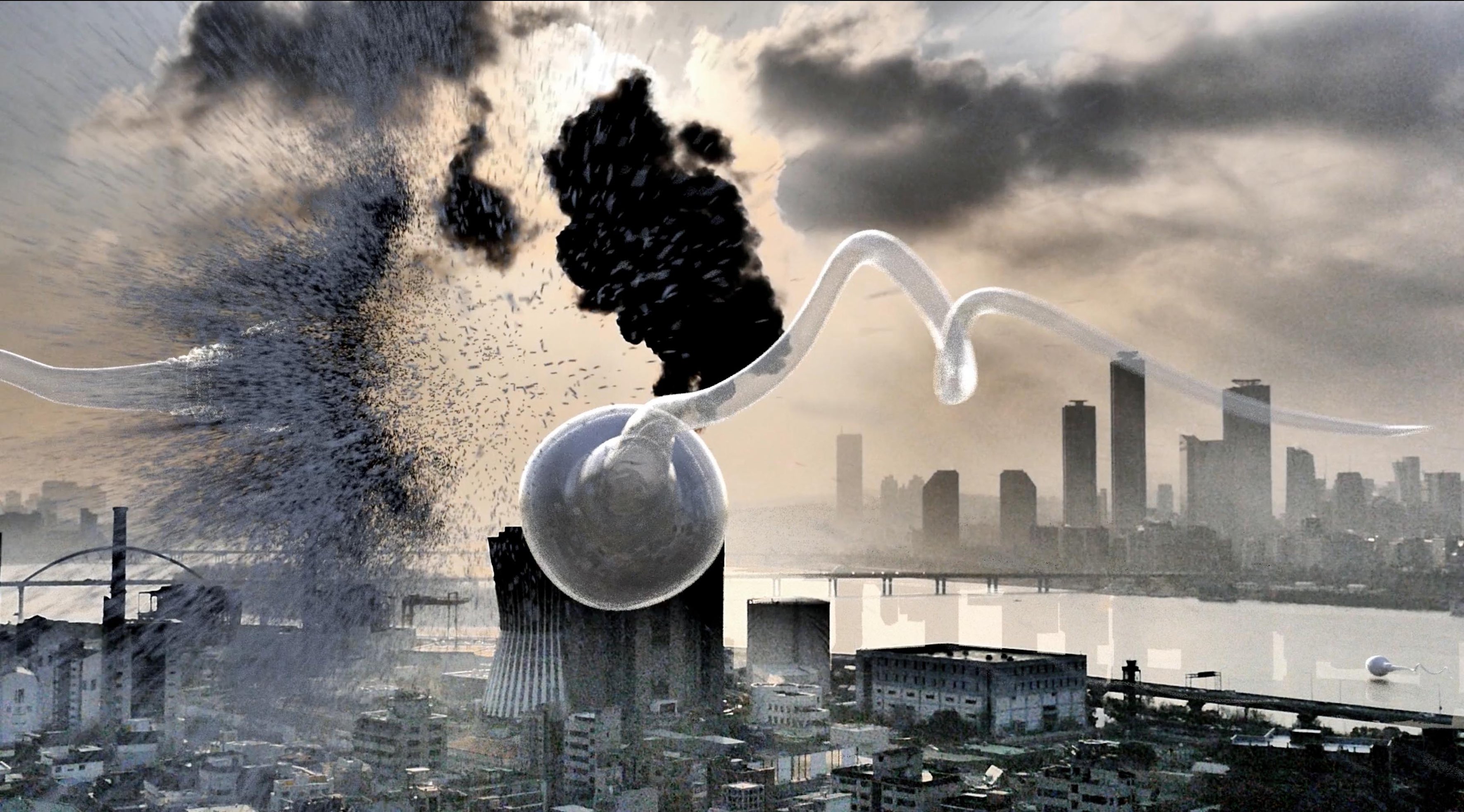
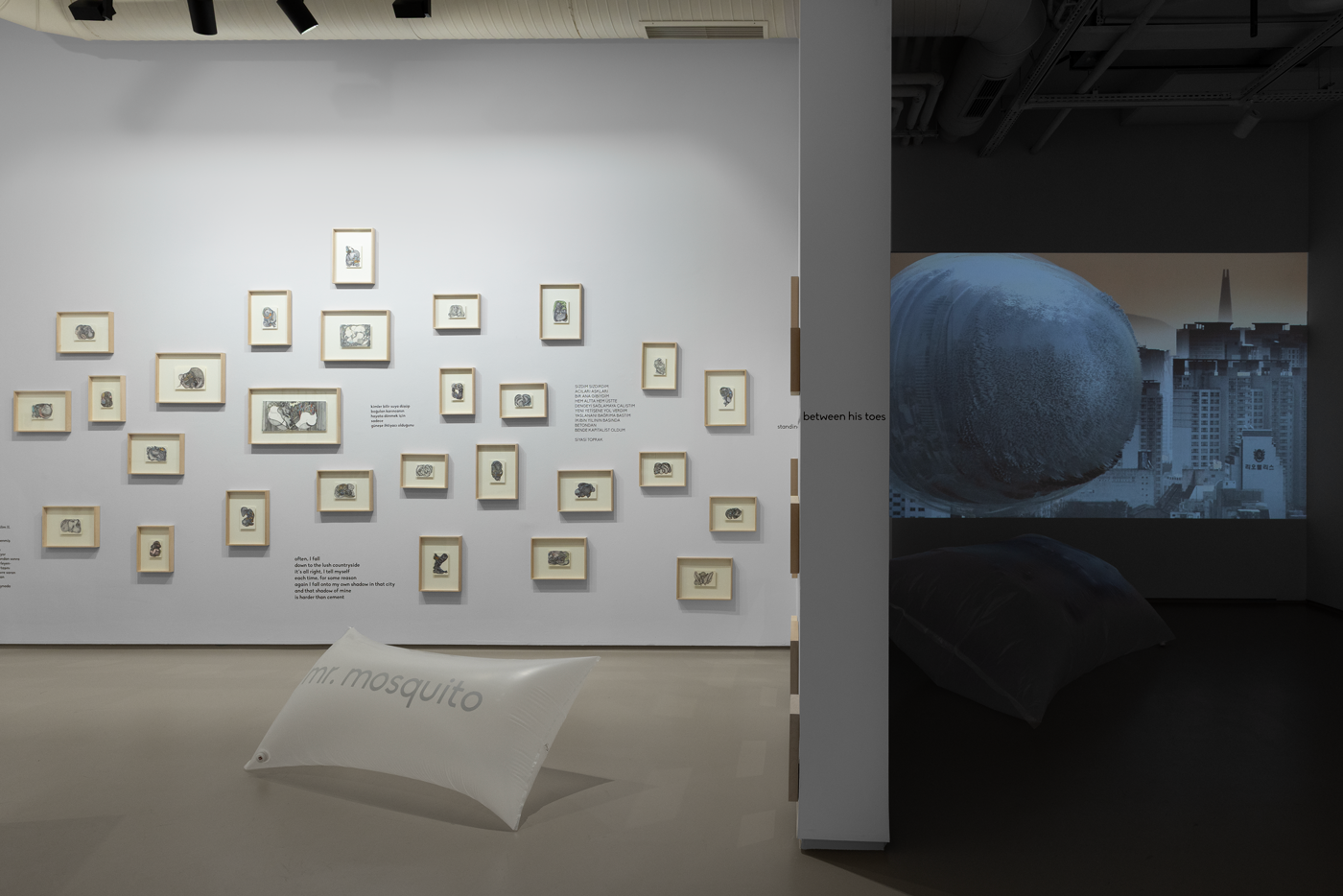
The Bubbles of Mind, begun immediately after the COVID-19 pandemic, is an allegory of the oxygen-depleted ecosystem of capitalism through large transparent plastic bags used for international logistics. Behind one of the bubbles, the video work The Gene of Cities traces the movement of capital as a process of biological migration and mutation. In the bubble, a human face is trapped, suffocating inside the shipping bags, evincing the neoliberal inequality that accelerated during the pandemic as an ecological disaster. The video lampoons the patriarchal solidarity of financial capital as a kind of "invasive alien DNA sequence”, in the migration of London's sperm to Seoul via Amsterdam after Brexit. The digital images overlaid on urban topography show how capital occupies the biosphere by borrowing a claim to knowledge.
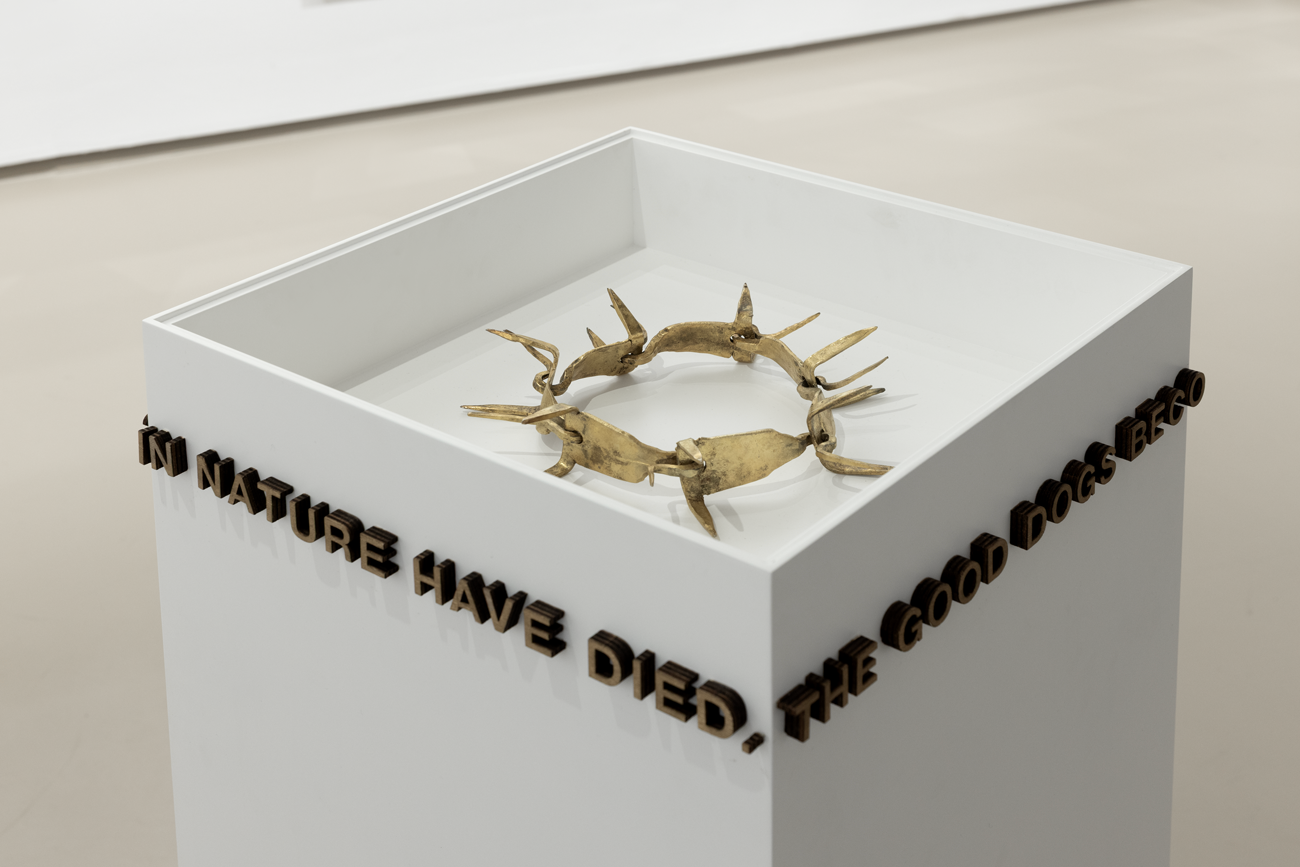
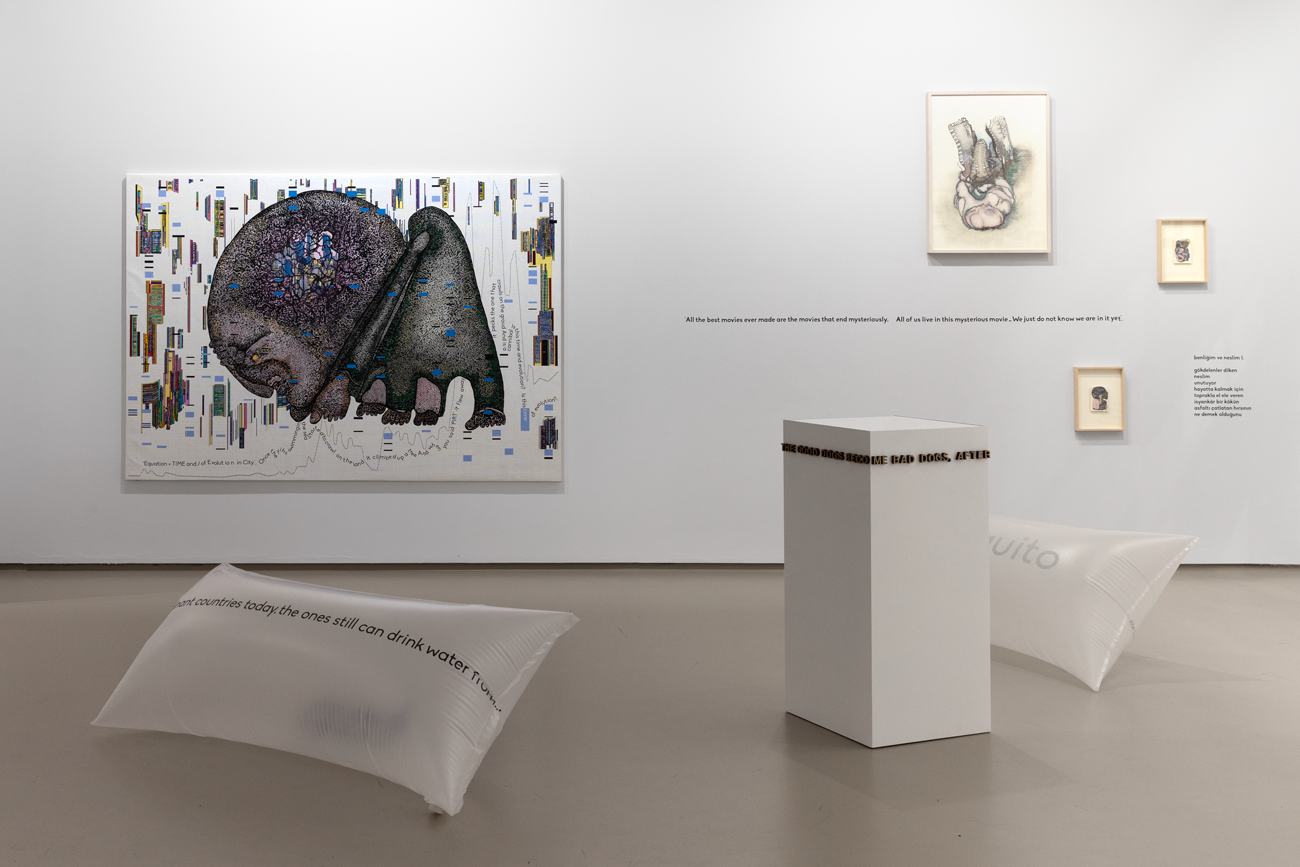
Another bubble, 'DEV1ET (Nation)' redefines the state not as a fence protecting life, but as a massive device that serves capital by enclosing resources and devouring nature. In particular, his poem which begins with "The dominant countries today, the ones still can drink water" directly exposes the ecological exhaustion of peripheral economies where even water, an essential condition for survival, is being appropriated by the logic of capital.
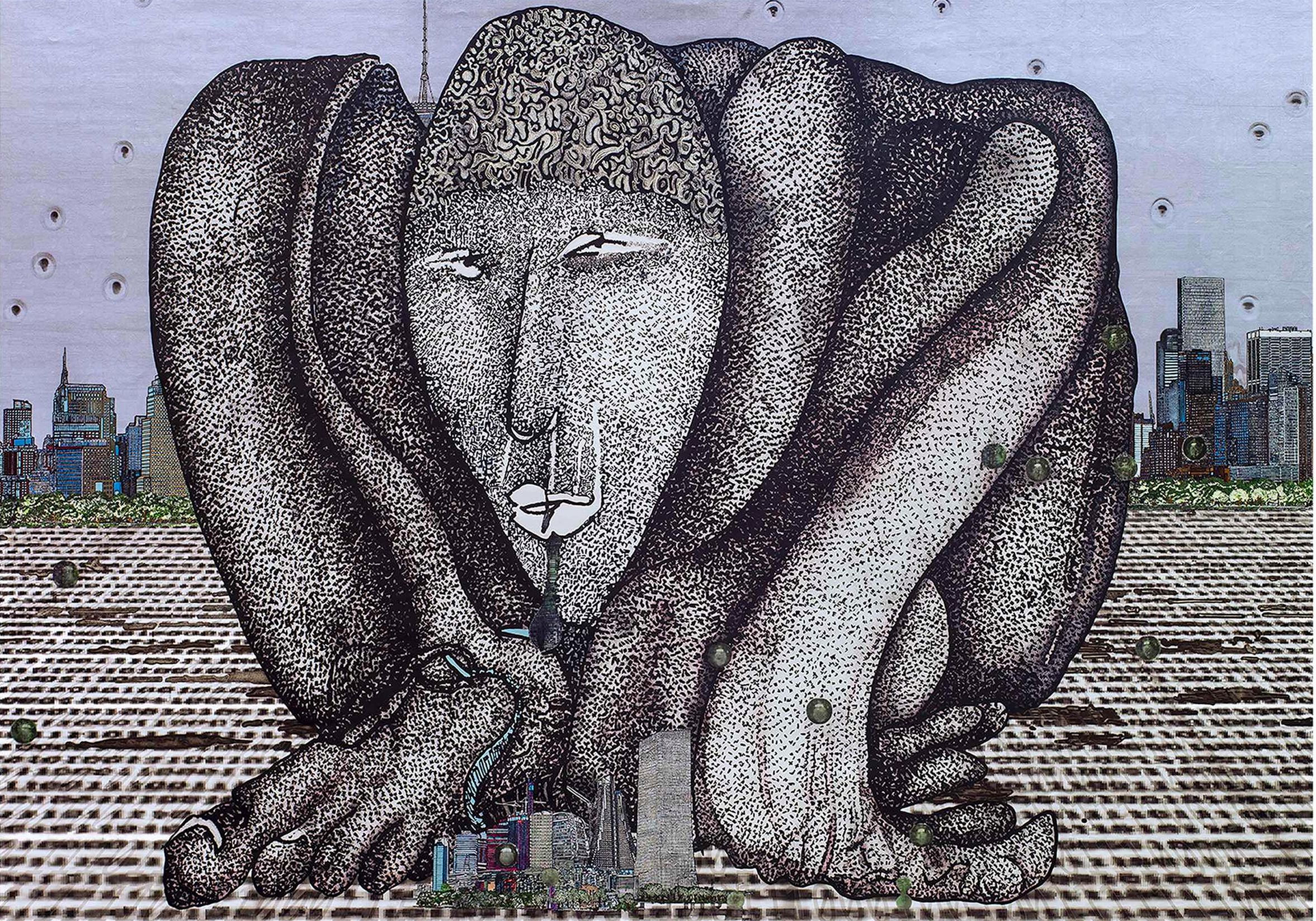
The Organic Cities [made up of ‘us’], the painting series reconstructs the city as a mutant organism onto which the power of capital is projected. The phenomenon of the canvas, filled with hybrid beings where bodies entangle as dots and lines, demonstrates that the financial system is even reshaping human biology. The artist's declaration that "Money is influencing nature" suggests that capital has now become the force of a vast artificial evolution that replaces nature's providence.
This exhibition unfolds, layer by layer, how the ecosystem of the city is being transformed and spent. Moving through the suffocation of packing material, the migration of genetic capital, and the fusion of organisms, the audience comes to sense that humans are not subjects managing the ecosystem from outside but one species being transformed within it alongside everything else. What distinguishes Örenli's practice is a refusal to seal this recognition into simple accusation.
Written by Ji Yoon Yang, Director of Alternative Space Loop, Seoul
This exhibition is curated by Ji Yoon Yang, the director of Alternative Space LOOP and Sound Art Korea. After completing the curatorial program at de Appel in Amsterdam, she worked as director of Corner Art Space and as chief curator at Mimesis Art Museum. Since 2007, she has co-directed Sound Effects Seoul: Seoul International Sound Art Festival. Her curatorial work consistently explores the expanded field of visual culture and seeks to implement public-oriented communication through radio, the internet, and social media platforms. Over the last decade, Yang has focused on rethinking experimental art institutions with particular attention to ecofeminism. She co-founded the Feminist Art School with Baruch Gottlieb in February 2026.